
Say It Better
Learn to speak your customers' language and watch the transformation!
There’s a curious paradox among experienced freelancers: they do incredible work, but you’d never know it just by looking at their website, social media, or proposals. It’s not that they don’t care about their brand; it’s that they’ve lost their sense of perspective. In this article, I’ll show you how to look at yourself through your customers’ eyes and turn that insight into high-impact copy.
I see it all the time with freelancers and small business owners. They do great work, have years of experience, and boast a long list of happy clients—yet their website and pitches don’t hit as hard as they should. It’s as if the business owner is talking about something completely different from what’s actually happening on the job.
Attracting new clients who don’t know you yet becomes an uphill battle because your communication doesn’t clearly show where your true strengths lie. This is often summarized as: “We just need a better copy.” But in my experience, the problem isn’t usually the writing itself.
The problem is that, over time, we get too deep into our own industry. We see too many layers, details, and connections. We lose our “outsider” perspective. Instead of communicating the clear essence of what we do, we communicate the complexity.
It’s no coincidence that many seasoned professionals only “truly see themselves” when someone interviews them, writes an article about them, invites them onto a podcast, or introduces them at a conference. They might grumble that the journalist “simplified it too much” or “didn’t get it quite right,” but then they’ll clip the article and tape it above their desk. It’s only through the words of others that we start to see the full picture of why we are exceptional—and why our products or services actually matter.
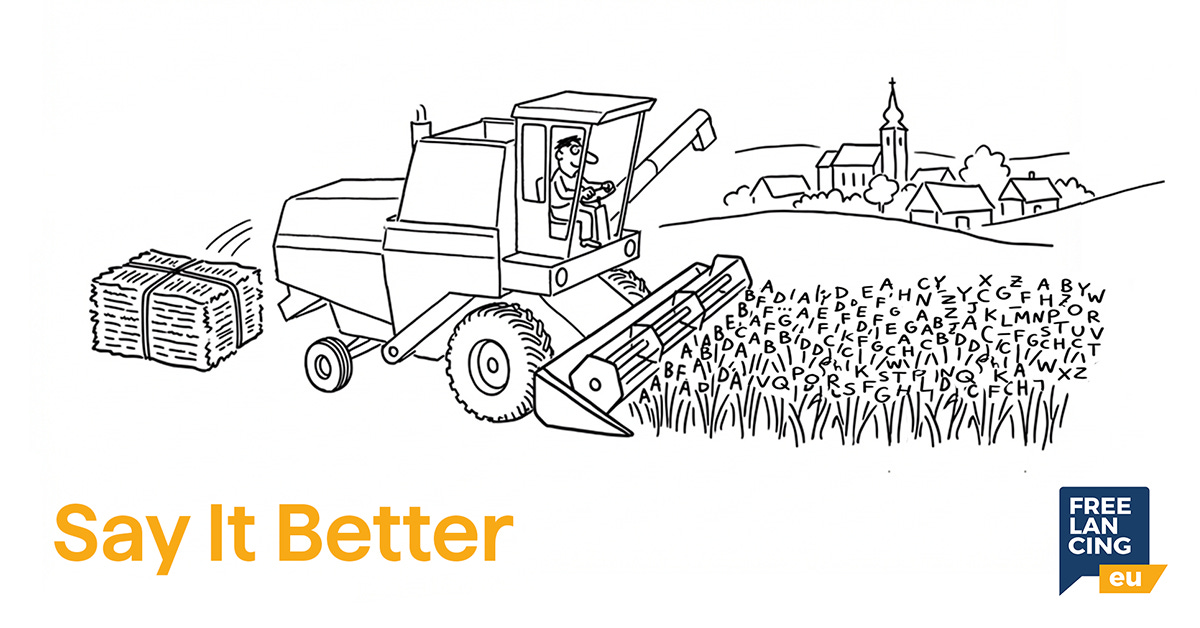
What you emphasize vs. what your audience cares about
You might be thinking, “Well, no one is inviting me to speak at conferences or be in the media,” but you can give yourself a very similar experience on your own. My goal with this article is to get you to let your customers speak for you. I want you to call them and ask about their experience with you and your business.
The results will likely surprise you. In fact, you’ll probably start talking about your work very differently from then on. As entrepreneurs, we are often wrong about what actually matters to our customers. Consequently, when we try to “sell,” we emphasize completely different aspects than the ones the customers would highlight themselves.
Příklad z praxe: Výrobce masivních paland mluvil všude hlavně o designu a řemesle. Zákazníci ale říkali: „Hledali jsme postel, která se s dětmi nebude viklat a rozpadat.“
A few real-world examples: The bunk bed maker talked incessantly about “design” and “craftsmanship.” His customers, however, said: “We were just looking for a bed that wouldn’t wobble or fall apart while the kids were playing.”
The pergola shade seller: He focused on “sun protection.” His customers, however, were just as concerned about “blocking the wind.”
The second thing experienced professionals often lack is the right vocabulary. You write something for your website or an article, but you can feel that it’s just not quite right. No matter how much you rewrite it—even with the help of AI—it feels off.
This is where your customers are your best resource. If you get them talking and don’t settle for generic testimonials like “It was great, highly recommended,” you will discover sharper, more effective words than you could ever come up with at your desk.
Your customers’ language is personal, vivid, and full of specific examples you can’t just invent.
To give you an idea: A catering company liked to call itself “creative.” To customers, that was a hollow word—until they heard a specific example: “We served snacks for a science conference in glass test tubes.” Suddenly, they understood exactly what “creative” meant.
A CRM software company kept talking about “oversight and control.” Their customers put it much better: “Finally, I don’t have papers scattered across my desk and I don’t have to open three different Excel tabs at once.”
The better you name the problem, the more people will recognize themselves in your solution. And that is the starting point for a real conversation.
We used to talk naturally; now we have to schedule it
We didn’t used to be so far removed from our customers. We didn’t have to “plan” to call them for an interview. If you sold herbs, you had a stall at the market. If you made jewelry, you had a workshop. Everything happened face-to-face. Talking to customers was a natural part of the sale.
In the online world, it’s easy to lose that feedback loop entirely. Then we wonder why we don’t really know who we’re talking to or what information is actually relevant to them.
This is why the interest in “Customer Experience” (CX) is exploding, even in large corporations. As consultant Lukas Pitra recently mentioned at a freelance think tank: “Companies are starting to realize how vital it is to actually listen to their customers.”
But talking to customers shouldn’t be a privilege reserved for corporations and research teams. That opportunity is within reach for all of us. All it takes is a phone and the decision to try something new.
Three questions to see yourself through your customers’ eyes
Can you describe the moment you realized you couldn’t handle this on your own and needed someone like me? What was happening then? (→ This gives you context; you’ll understand their pain points and the moment of decision.)
Looking back now, what ended up being the greatest value of our collaboration? What actually changed in your life or work? (→ This reveals the real benefit, moving past “general satisfaction.”)
If you were talking to someone close to you who needs my help, how would you describe me? What would you say? (→ This gives you specific words and ideas for a natural-sounding “about me” or pitch.)
When you talk to your customers, you don’t just get ideas for your copy. You change your entire perspective. For a moment, you see yourself through the eyes of the people you do all of this for. That is how stronger websites, clearer offers, and more persuasive communication are born.
Often, all it takes is three or four customer interviews where you ask the right questions and then simply listen. Because the “perfect words” for your website, posts, or proposals already exist. You just haven’t heard them yet because you haven’t asked.
Michaela Weikertova has spent over a decade helping businesses and freelancers articulate their value—from websites and proposals to everyday communication. She is the creator of the 365 Copy Tips project (in Czech) and specializes in clear, high-impact writing for an era of information overload. In her practice, Michaela helps seasoned professionals rediscover the core value of what they do and translate it into the right words. Her strategic approach relies on customer interviews as a primary tool for building strong brands and a standout market position.